Target More Than Doubles Earnings, but a Tariff Refund Did the Heavy Lifting
Earnings of $4.11 a share against $2.05 a year earlier, and $1.65 of that came from a $994 million refund of tariffs the Supreme Court struck down. The same release shows that a comparable one time gain was taken out of the adjusted figure last year.
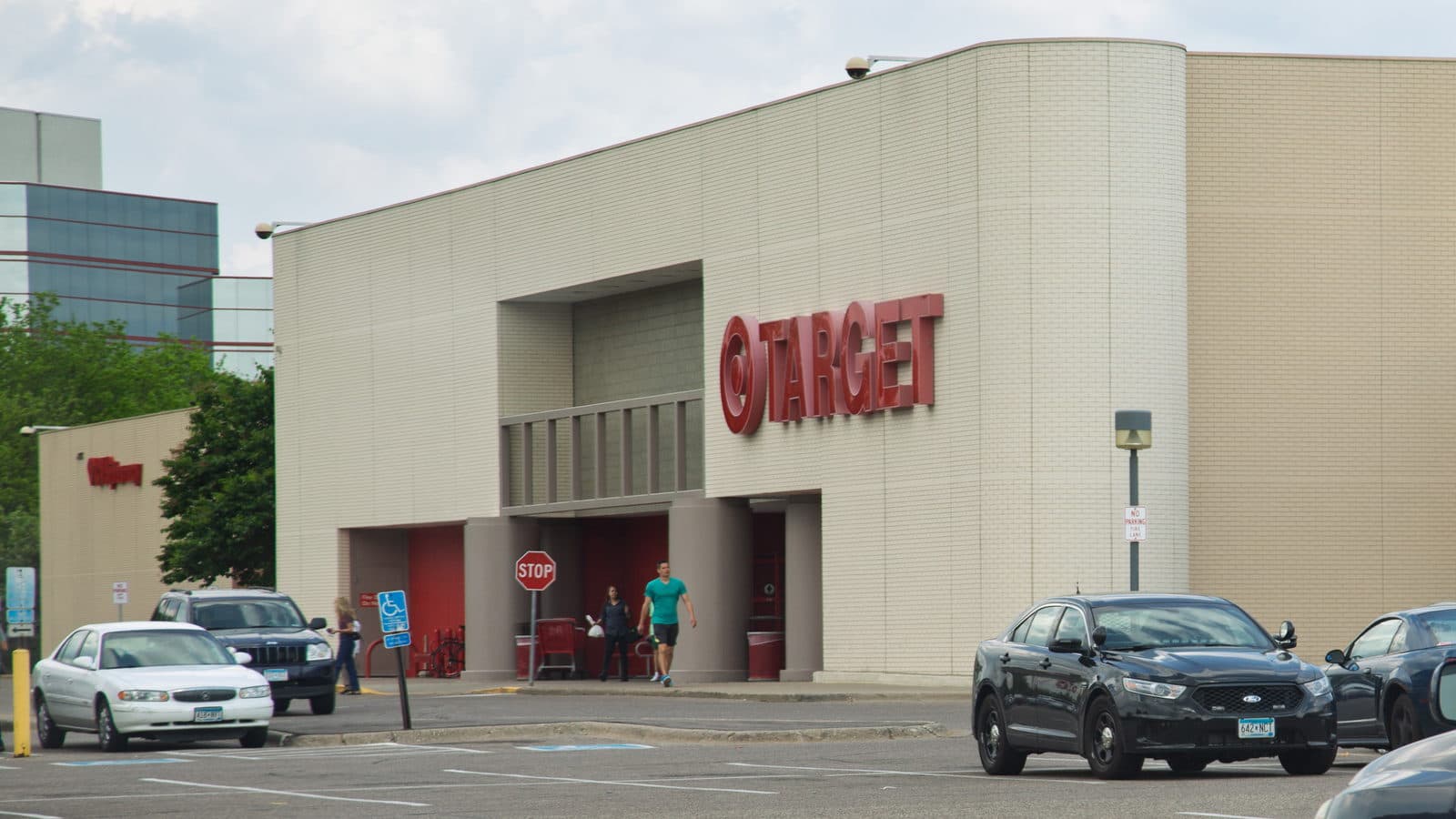
Photo: Tony Webster, CC BY 4.0, via Wikimedia Commons
Target reported earnings of $4.11 a share for the thirteen weeks to 1 August 2026, more than double the $2.05 it made in the same quarter a year earlier, and comfortably ahead of the $2.33 that analysts surveyed by LSEG had been expecting.
The explanation arrives in the second sentence of the company's own announcement, which discloses that the quarter includes $994 million of refunded tariffs, money Target had already handed to the government and has now got back, worth $1.65 a share once tax is taken off. Almost the whole of the gap between the reported figure and what analysts had pencilled in is that single item, and setting it aside leaves a beat of $0.13.
Take the refund away and the same quarter produces $2.46 a share, growth of 20 percent on last year, which is the rate of growth Target itself points to. That $2.46 is our own arithmetic rather than a company figure: net earnings of $1,877 million, less the $752 million the refund contributed after tax, divided across 456.6 million shares.
Against what the market expected
The most widely quoted forecast was the $2.33 average from LSEG's survey of analysts, and Zacks carried a similar $2.30. Either one is the fair comparison with how the business actually traded, because none of the analysts had built the refunds into their numbers.
Target Q2 2026 diluted EPS, reported and excluding the tariff refund
EPS, dollars
Bar chart plotting 1 series — Diluted EPS — across 4 points of measure. Values range from 2.05 to 4.11. The full figures are available in the data table below the chart.
Reported and prior-year figures are from Target's earnings release. The $2.46 is our own arithmetic: net earnings of $1,877 million less the $752 million after-tax refund, divided by 456.6 million diluted shares. The consensus is LSEG's analyst survey as reported by CNBC.
Source Target Corporation Form 8-K, Exhibit 99, 19 August 2026; CNBC
The same release took a comparable item out last year
Alongside the official profit figure, companies usually publish a second, adjusted one, which leaves out anything they regard as unrepresentative of how the business is really trading. Target's adjusted figure for the quarter is $4.11, exactly the same as the figure prepared under standard accounting rules, because the refund was left sitting inside both of them.
There is a precedent for the opposite treatment in the very same document. In the first quarter of last year Target booked a gain of $441 million after tax from settling litigation over credit card interchange fees, the charges a merchant pays to the card networks and banks every time a customer pays by card, and in those cases Target was the one suing. That gain was taken out of the adjusted figure, and the table showing how the company gets from one measure to the other still carries the adjustment for the prior year period.
So the same release treats two similar items in opposite ways: a one time litigation recovery of $441 million came out of the adjusted figure last year, while a one time tariff refund of $752 million was left in this year. Both are recoveries of money the company had already paid out, and both were fully disclosed, but the consequence is that the six month comparison is flattered at both ends. Target shows adjusted earnings of $5.83 a share for the first half against $3.35 a year ago, whereas removing the refund from this year, by our own arithmetic, makes it $4.18 against that same $3.35.
What the refund is
The money relates to tariffs imposed under a 1977 law that gives the president emergency authority over foreign commerce. On 20 February 2026 the Supreme Court held that the law does not authorise the president to impose tariffs at all, and by April the customs service had begun accepting claims from the companies that had formally imported the goods and paid the duty.
Cost of sales is simply what a retailer paid for the goods it sold during the period, and that is the line where Target has recorded the refund. Putting it there makes the merchandise look as though it cost less to buy, which lifts the profit margin analysts use to judge how well the shops are being run, rather than landing further down the accounts where a reader might expect a legal windfall to sit. Target does flag the point, reporting that 3.7 percentage points of its margin for the quarter came from the refunds rather than from selling anything.
The effect is plain enough on the income statement, where the cost of the goods Target sold actually fell in a quarter when its sales rose, and putting the refund back, by our own arithmetic, turns that fall into a rise.
The underlying quarter was still better
Even with the refund stripped out altogether, the business traded better than it did a year ago, earning a slightly wider margin on the goods it sold, which Target puts down to lapping last year's heavy markdowns and cancelled orders and to growth in its advertising business. Sales at stores and sites open at least a year grew, and almost all of that growth came from more visits rather than bigger baskets, while the cost of running the shops and the head office rose a little as a share of sales.
What the guidance does with it
For the full year Target now expects between $9.90 and $10.90 a share, a forecast that it says already includes the $1.65 from this quarter's refunds. Take those out and the midpoint of the new range works out, by our own arithmetic, at $8.75, against a midpoint of $8.00 in the range the company was guiding to before, which is the $0.75 raise it describes. A footnote then adds that the guidance excludes any further tariff refunds that might arrive.
That footnote is the most useful sentence in the release, because it confirms that the $1.65 is not something the company expects to see again inside the guided figures. The release does not say how much of this duty Target paid in the first place, how much it has claimed back, or how much more it still expects to receive. Its full quarterly filing with the regulator had not appeared when this was written, so every company figure here comes from the earnings release itself, with the analyst estimates and our own calculations labelled as such.
One asymmetry is worth watching from here, because the chief financial officer, Jim Lee, told reporters that the company will keep investing in price, having already cut the price of more than 10,000 items over the past year. A refund lands all at once in a single quarter, whereas price cuts eat into the margin slowly, spread across all the quarters in which the cheaper goods are eventually sold.
None of this makes the $4.11 wrong, because it is a real number under the standard accounting rules and Target set out what is inside it on the first page of the release. It is simply not a rate the business can be expected to repeat, and the company's own guidance says so.
Sources
- Target Corporation, Form 8-K Exhibit 99, Target Corporation Reports Second Quarter Earnings, filed 19 August 2026 (opens in a new tab)U.S. Securities and Exchange Commission (EDGAR)
- Target Corporation filing history, CIK 0000027419 (opens in a new tab)U.S. Securities and Exchange Commission (EDGAR)
- Target Corporation Reports Second Quarter Earnings (opens in a new tab)Target Corporation
- Tariff Refund Mechanism Takes Shape After Supreme Court's IEEPA Ruling (opens in a new tab)Skadden, Arps, Slate, Meagher & Flom
Subscribe
Each note by email when it is published.