Nvidia Beat Guidance by $5 Billion and Cut Its Margin Outlook
Both trace back to memory. Supply commitments more than doubled to $279 billion in a single quarter, and the price increase meant to cover them does not take effect until next year.
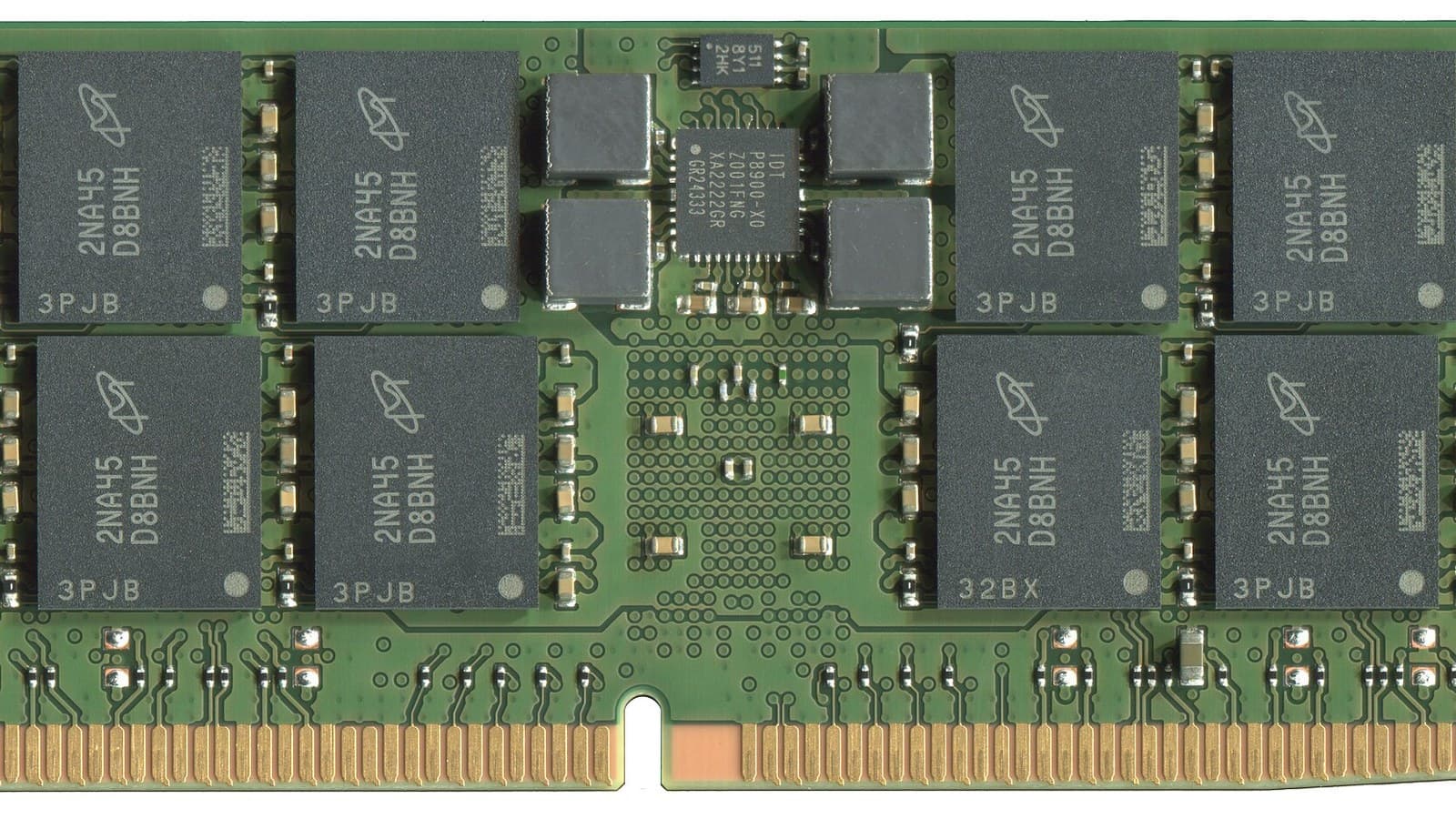
Photo: PantheraLeo1359531, CC BY 4.0, via Wikimedia Commons
Nvidia reported second-quarter revenue of $96.2 billion on Wednesday against the $91.0 billion it had guided to three months earlier, with data centre revenue of $89.0 billion and diluted earnings of $2.46 a share. Revenue has now doubled on the year, gross margin held at 75.0 percent, and the company told investors to expect $108.0 billion in the quarter that is already a month old.
One number pointed the other way. Having guided the quarter just reported to 74.9 percent and delivered 75.0, Nvidia guided the current one to 74.0 percent, a full point below where it has just landed, and the explanation for that single point turns out to be the most consequential thing in the filing.
Nvidia GAAP gross margin, and where the company expects it to go
Percent of revenue
Bar chart plotting 1 series — Gross margin — across 4 points of quarter. Values range from 72.4% to 75%. The full figures are available in the data table below the chart.
Three reported quarters and the outlook for the fourth.
Source Nvidia Corporation, results for the second quarter of fiscal 2027, filed 26 August 2026. The final column is company guidance, plus or minus 50 basis points.
Where the point of margin went
When a company recovers a cost increase and nothing more, it adds the same number of dollars to revenue as it adds to cost of revenue, which leaves gross profit exactly where it was while the percentage falls, because the denominator has grown and the numerator has not. On the revenue Nvidia has guided to, around a billion and a half of cost handed straight through produces precisely the step the company described, with gross profit landing in the same place under either version.
A softer margin guide is therefore what passing a supplier's bill along looks like from outside the company, rather than evidence that anything has gone wrong with demand. The distinction matters because the two are reported identically and read very differently.
The bill is memory, and it is enormous
The reason is not in the press release. It sits in a short paragraph of the chief financial officer's commentary, under the heading Commitments, which records that in the thirteen weeks to 26 July the company more than doubled what it has contractually promised to pay its suppliers, primarily to buy memory. The size of that promise is easier to judge against Nvidia's own sales than on its own.
What Nvidia has promised its suppliers, against what it sold last year
US$ billions
Bar chart plotting 1 series — US$ billions — across 3 points of item. Values range from 119 to 279. The full figures are available in the data table below the chart.
Supply and capacity commitments outstanding at each quarter end, beside revenue for the year to January 2026. Of the $279 billion, $267 billion falls due within three years.
Source Nvidia Corporation, CFO Commentary on Second Quarter Fiscal 2027 Results, filed 26 August 2026, and Form 10-K for the fiscal year ended 25 January 2026.
The company has undertaken to buy nearly a third more, in components it has not yet received, than it sold in the whole of its last financial year. Cloud agreements, data centre leases, equity investments and capital expenditure carry a further $87 billion of commitments on top.
The price increase has not arrived yet
Underneath the guidance sits a timing point that changes what it can be taken to mean. The increase Nvidia's customers were told about last week, of more than 15 percent on servers built around its chips, applies to systems shipping early next year, while the quarter the company has just guided ends in late October. For these three months the higher memory cost is being paid and the higher price is not yet being charged, which is the least flattering moment in the cycle and the one Nvidia is currently steering through.
If the pass-through holds, margin should recover once the increase lands, no earlier than the fourth quarter and more plausibly the first quarter of fiscal 2028. Should it recover past where it began, the increase will have been doing more than covering the bill. Neither answer is available before January, which makes the next two sets of results the ones that settle it.
Lending at both ends of its own market
The supplier side is not the only place the buildout has begun to show up in Nvidia's accounts. Receivables and inventory both climbed during the quarter, cash generated from operations fell by roughly half against the three months before it, and the company raised debt along the way.
| Quarter ended 26 July 2026 | Prior quarter | |
|---|---|---|
| Days sales outstanding | 60 days | 45 days |
| Inventory | $31.6bn | $25.8bn |
| Cash flow from operations | $24.1bn | $50.3bn |
| Senior unsecured notes issued | $25.0bn | not disclosed |
Source: Nvidia Corporation, CFO Commentary on Second Quarter Fiscal 2027 Results, filed 26 August 2026.
The receivables movement carries a stated cause, which is extended payment terms on large multi-quarter agreements with what the company calls investment-grade customers. Its commentary is then unusually candid about why such terms are being offered at all:
AI clouds and model makers are seeing extraordinary demand for AI infrastructure, yet many are growing faster than their balance sheets and long-term credit profiles can support.
Nvidia goes on to describe arrangements that help selected customers secure the land, power and data centre capacity they need, under which it earns revenue on the initial sale of that infrastructure and, where certain conditions are met, a share of what those clouds later earn from their own customers. Set beside the equity investments it has committed to AI model makers and infrastructure financiers, the pattern is of a company extending credit at both ends of its own market, forward-buying components at whatever the memory makers are asking while giving the eventual buyers longer to pay.
A quarter that beat on every headline line also carried a guided margin a point below what it delivered, and the two facts have the same cause. The memory shortage now sits on Nvidia's balance sheet rather than only in its suppliers' price lists, and on the timetable the company has itself described, a single point of gross margin will not be the last of it.
Sources
- NVIDIA Announces Financial Results for Second Quarter Fiscal 2027 (opens in a new tab)U.S. Securities and Exchange Commission
- NVIDIA, CFO Commentary on Second Quarter Fiscal 2027 Results (opens in a new tab)U.S. Securities and Exchange Commission
- Nvidia Corporation, Form 10-K for the fiscal year ended 25 January 2026 (opens in a new tab)U.S. Securities and Exchange Commission
- Nvidia Corporation, Form 10-Q for the quarter ended 26 April 2026 (opens in a new tab)U.S. Securities and Exchange Commission
Subscribe
Each note by email when it is published.